Sunday, September 18, 2011

To Know, Know, Know You Now

I sort of accidentally attended my high school reunion last night. A "save the date" postcard in flame orange had arrived at my house fully six months ago, the date of the reunion unfortunately hidden under some skinny adhesive strip the post office affixed for no apparent purpose other than to add an uninformative barcode and eliminate the vital information of the mailing. A more formal and informed invitation never arrived, however, and I'm now suspecting that innocent looking barcode may have actually contained important details.

No matter. I kept the faith and waited. After all, one of my very best friends from high school was on the reunion's planning committee; surely she would make sure I got an invitation. But months went by, and I didn't, she didn't. Apparently, our friendship had changed. High school friendships can do that suddenly and without known provocation. I sort of forgot about it.

One or two small things happened in the meanwhile: I went to Egypt for a life-altering visit in the post-revolutionary months, which is the political equivalent to riding the curl of a wave  if you're a surfer: the experience of total jubilation. I had a bike crash that was particularly gruesome, hence awesome. I had a Chinese family visit me for a month and my world grew larger again. I took in a lodger when the new Republican government of my state lopped twelve percent off my paycheck. I finished plastering my upstairs hallway as well as my oil painting, "Romania." I saw tons of good plays, had a few good dates, and wrote some mediocre poetry and lots of blogposts. Time passed somehow with remarkably little tedium.

This Saturday I went to visit my dad, who still lives in the little northern city aka hamlet where I went to high school. Entering town, I stopped by a friend's apartment to deliver some flowers for his mom and see if he was ready to marry me yet. He accepted the flowers but declined the marriage option. Then his younger brother stuck his head out the doorway. I'd never met him before because he went to the rival high school but he was in from New York for the reunion, too, the two schools having finally made their peace for reason, as is usually the case, of economy. His wife had declined his invitation to make small talk and drink too much with people she'd never met before and would never meet again. "Do you want to go with me and use her ticket?" he asked.

Eight hours later, encouraged by my dad and spruced up as much as you can when you're not at home and have no wardrobe options or drawers full of dried up twenty-year-old make-up, mascara that's the thickness of tar, concealer that's so ancient it comes with its own irregular pigmentation problems, I was back to pick up Brother Rob. He looked gorgeous. Made me wish I could move to New York, not for him personally, but for all the men with arty ponytails hanging casually down the back center seam of impeccably tailored suitcoats above dress slacks of just the right cut and fabric. You know. The kind that billows just the slightest bit when they walk down city sidewalks with that urban purposefulness that makes men worth the difference in the sexes.

And we were off. Neither of us had ever attended any of the earlier reunions, and neither of us felt particularly well connected to our classmates either now or in our fading but still vaguely uncomfortable memories. But together we had a little buttressing, a small fortress even, and through the hours that followed, that was just enough to make the whole night pleasant. Really, it was like having a treehouse where you could sneak with a flashlight late at night. Refuge and adventure wrapped up in one.

Hanging out with Rob was the best part, when all was said and done, and probably what I'll remember best about this night of really bad, sweet wine in those damned plastic highball glasses. But there were some other nice parts to the night, too, even once I put aside the smug fact that I was not in the two-thirds of the class who'd completely lost their youthful body proportions somewhere under accumulated subcutaneous fat. Remember, this is Wisconsin. The women, it must be noted, looked much better as a whole than the men. Part of this is hair dye and make-up. Another huge part of it's social pressure: We have to keep looking good or we lose our social capital. Whatever it is, it works. Aside from my "date" and a few others, these were men who had walked their final runway and who were now content to sit at the furthest end of it, trolling a fishing pole in the somnabulent waters of middle age. The women, by and large, looked a lot better.

Best moment: A classmate I hadn't seen once since high school came up and said she'd seen some of my poems and loved them, wondered if I had a book of them. Said one of them made her cry and pick up the phone and call her mom for what was a significant change in their relationship. If I was still in high school with this "girl," she would be my new best friend. Since I don't work on publishing my poems, I'm always absolutely thrilled and surprised to find that anyone finds them, let alone finds them worth reading.

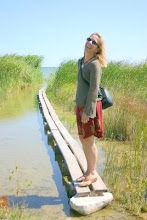
Second best moment: My very first boyfriend, the one-time short and scrawny seventh grader with whom I was inevitably paired when lots were drawn since I was equally short and scrawny, had grown up handsomely. (Why is this somehow gratifying? Does it vindicate all the silly impulses we followed back then? Do other people find satisfaction in discoveries like this, or is it just my unabated shallowness?) We dutifully exchanged nods across the crowded room, then smiles crossing the distance, and cheek kisses up close. I met his wife; he met my scrutiny. I found out what he did (he did well); he found out what I do (I do largely as I please). A few hours later, he walked up to where I was sitting with Rob and whispered in my ear, "When I saw you walking with your date down to the lake on the boardwalk, I was intensely envious of him."

So it goes. In some obvious ways, I have not matured enormously, despite the furrow deepening by the month, I swear, between my eyebrows. But in one important way I have grown up. I can appreciate all these people now, the ones I went to school with forty years ago, the fat ones and the ones who look like models, the ones who showed up in worn down white walking shoes with velcro as well as the ones who came in with Gucci or Ann Taylor. I watched the couples out on the dance floor, swaying their ample trunks to the rock and roll we still loved cause it made us feel young again, and I was so happy for each of them, including myself, that they were still out there, embracing it, having a good time, keeping up friendships, laughing in the face of old age.

Sometimes those old friendships actually turn out to be deeper than you ever realized they could be.

Friday, September 16, 2011

To Name You Is to Claim You

Generalizations, I would venture, provide the central nervous system of rational thought and rational thought the backbone of western civililzation. If you are not a fan of western civilization or indeed of civilization from any part of the world today, you may as well close this page now and go gnaw on bones.

Without generalizing, we cannot discuss anything more than specifics. One toenail. One drop of rain striking the windshield. One second of pain shooting up our arm into our molars. No discussions of heredity or weather or monsoons. No shoe fittings, no forecasts, no diagnoses of heart attacks. Without generalizing, we're pretty much fools salivating in dark corners hoping without reason someone will feed us.

But when generalizations become stereotypes, the anatomically correct model that teaches medical students how and where to press, to slice, to listen is rendered something no more useful than a paper doll. Flat. Easily torn. Of little value save as a collectible.

I am trying hard not to make my hundreds of contacts with students into stereotypes, even as I try to learn enough about them to generalize in a way that allows me to step with some sort of assurance into the pool of light that is each of their individualized collective lives.

Two Plus Two Equals Anything

I've had such a long, bad day to close out this long, hard week that even the most fundamental truths are not making sense to me anymore.

Like, two plus two equalling four. This, quite frankly, isn't true. Two plus two could equal anything; it depends entirely on the identity of the two.

For instance, if each of the two is a half of something, you only have one. If each of the two is a rabbit or almost anything taxonomically close to a rodent, you have not four, but possibly a kazillion.

I'm just sayin' that life is a little more complex than it might seem, and that language has a part in speaking the truth.

Like I said, it's been a doozy of a week.

Wednesday, September 14, 2011

Arriving in Cairo: Dazed and Duty Free


Flying from the US to Egypt is a long flight even if you live in a major east coast city. If you live in a slow little city in the heartland and fly to Cairo, you arrive at your destination possessed of two advantages over other first-time visitors: You know you are in a very distant place (you just spent 18 hours in a cramped position to prove this), and you are acutely conscious of the fact that everything takes longer than expected. These two bits of knowledge prepare you better for the cultural shock of Egypt, which includes, among other more physically salient differences, one of the world's most strikingly inefficient economies; I'm guessing there's no word for "hurry" in Arabic. Given these facts, you can sit back and relax; you may as well smell the flowers along the way, so to speak. (I must note that there were no flowers on any of my flights actually, unless the bad breath of my seatmate from Detroit to Amsterdam could by any stretch of your imagination be deemed floral. I am thinking here of a remarkable flower called for good reason a corpse flower.) Taking it easy will help you adjust to the weeks ahead of you in Egypt, a place where eventually you will be somewhat amazed to discover that they actually DO run on the same schematic of time that we do in the western world, the structure of minutes, hours, and days. So put your feet up, relax, have a good glass of wine.

Approaching Cairo by plane
Or not. The wine, that is. I'm spectacularly unskilled at sleeping in moving conveyances, which comes in handy on escalators and bicycles but which is lamentable for intercontinental plane flights. My daughter had suggested I take full advantage of the free wine still offered on these longer flights in order to get some sleep, my tolerance for alcohol being nearly as small as my ambulatory insomnia is large. Well, I am even worse at drinking wine in daylight than I am at sleeping in daylight, so it wasn't until I was on my last flight leg that I finally ordered some vino. It was then I realized I was going someplace truly different. The wine on the attendant's cart was in a box. That's weird enough, but on the side of the carton I read: "Almost 50 percent real wine!" Oh yeh. That's right. I was landing in an Islamic culture. The content didn't matter; I spilled most of my plastic cup anyway and resigned myself to staring out the window at the sere landscape that was beginning to materialize below now that the Mediterranean blue was receding behind our jet trails.

Islamic or not, the ebullient young couple waiting for me on the other side of the customs visa lines barely paused to buzz my cheeks before whisking me, my fresh visa, and barely expired plane ticket off to the duty-free shop to buy wine. Apparently, there's a reason there is no Egyptian section in your local wine shop. The shoppers plundered the shelves of French and Italian wines on my behalf. You know, I don't think I've ever bought liquor at an airport before; I've never had a rousing motivation to carry more glass bottles in my luggage than are absolutely necessary. Perhaps it's this way everywhere, that only a freshly arrived turista can buy alcohol in these shops. In any case, I had to be the one to purchase the liquor, which I was happy enough to do as long as I didn't have to carry them. In fact, that was the last I ever saw of those bottles of wine, except for one I took to my host's home later that night, another inadvertant "learning opportunity," since he turned out to be a Muslim and didn't really drink more than he felt was necessary for politeness.

Everything would prove to be another a learning opportunity. I think I was agog the entire time I was in Cairo but never more than that first night. It was extremely fortunate I wasn't driving and that the young man who drove me everywhere was so absorbed in my daughter he really didn't care how embarrassing her mother was, hanging out the back seat windows, clicking pictures of chickens and donkeys and dervishes, entire families loaded up on tiny motor scooters, women smoking cigarettes through the black veil that covered their lips. Their absorption in each other left me gloriously free to be absorbed by the city.

In the posts to follow, I hope to tell you some of what I saw and heard and felt. I hope by the time I'm exhausted, you'll feel a little bit like you went to Cairo with me. If you do, like me, you will surely want to return.

It's that Nile thing. Even though nobody in their right mind would drink from the Nile, it seems to hold true. You drink the Nile with your eyes now, but it draws you back just as powerfully as drinking was once promised to do.

Come visit Cairo with me.


Tuesday, September 13, 2011

The Summer Following the Spring Past the Winter

A very dear friend of mine, a young man who has lived in Cairo his whole life except for one visit to Mecca, wrote on his Facebook page today that he is giving up on Egypt; he is done trying to love her.

Love is hard, perhaps hardest when you love a woman as evasive and curvaceous as Egypt. We are not just speaking of Cleopatra here nor the bawdier queens of the Nile's once great pleasure barges. We are talking Egypt, incomparable Egypt, ineluctable Egypt. Love is hardest for the young. They are not cautious as their elders are. They wear neither armor nor life jackets; they dive even from cliffs without sounding the bottom of the ocean. Or the river. "If you drink from the waters of the Nile, you will always come back to her." This is the historic seduction of Egypt.

When I was there this June, the young man was resplendent. He may as well have been wearing the Egyptian flag for the way his pride was flying. My first night in this city, barely off the flights that had left Madison 18 hours earlier, he handed me an empty rifle shell. "It's from the Revolution," he told me, his eyes shining with emotion. It will always be my most treasured souvenir of this visit. Over the following days, as he demonstrated the unending generosity I would come to know as uniquely Egyptian, as he drove me wherever I wanted to go around Cairo, he introduced me to a vibrant city, a city full of color and light and commotion and happiness. He, like everyone I met in the early weeks of summer, had been part of the huge demonstrations that rolled over Cairo's streets this winter. And he, along with everyone else I met, from 8-year-old ragamuffin boys to men so old lifting a tea cup was their version of a day's workout, was illuminated with a new sense of significance. But today, his new car had been stolen, and the police were uninterested in helping. The police have not changed much since Mubarak was forced out. They sort of disappeared for a while, when the January Revolution was at its fullest and best, but that moment, like the peak blossom of the rose, is brief, and the petals drift almost imperceptibly to the earth. The police are
back; they've stepped out of the shadows. The revolution seems to have stalled. The people are still hungry, for bread and for a change in governmental responsiveness. The colors have dulled. The air is polluted. Grumbling fills the teahouses instead of laughter. Israelis are shooting across the borders of the Sinai. There is talk about banning bikinis from the sea resorts that provide the last vestiges of tourist dollars.

When I was there early in summer, there was such jubilation everywhere.

Sunday, September 11, 2011

Where Are the Angels Dancing Now?

Beetle dancing on a pinhead
In Boulder, Colorado, the skies were even bluer if it's possible. Hard to say. All our memories of the New York sky filled up with so much smoke, so many little black stick figures falling in cartwheels through their final morning.

Some mornings the bus ride to work was quiet. We Americans tend not to talk to much to those we sit next to on public transit. Heck. We tend to not talk much to those we sit next to at the dinner table. But once in a while, given a random dynamic and the right combinations of loquaciousness and people, the bus in a small city like Boulder can be lively with conversation and the laughter of friends meeting.

This morning, as I took my seat and began my customary settling-in, something was already wrong. There was talk going on, a man's utterly solemn voice was speaking to someone with an equally sonorous tone, and yet the air was so thick with with words that would never be said only falling girders could have cut it. What was not said was deafening.

Slowly, like a slow motion, puzzling somehow, the reality so far from anything previously known that it took a while to clarify---why did those white clouds rise from the ground instead of drifting across the skies? where were these voices coming from and what were they talking about in such loud voice that everyone in the bus looked frozen?--truth dawned that morning, broke like a gap-toothed grin. Truth that would never allow the world to look the same.

Bus drivers don't broadcast radio shows on our buses. Until that morning, I didn't even know buses were equipped with radios. "There is apparently a great fire on at least several floors of the tower where the collision occurred." What disaster was this? Where? There was a radio broadcasting in the bus that morning, and in the silence through which it fell like bricks you could hear a pin drop and the pitter patter of angel feet dancing on the pinheads.

Nothing would ever be the same, world without end: Amen. God bless those who were there that last morning of American innocence; God save those who destroyed American innocence. The world needed this one last safe harbor of hope, and now it's gone, covered with dust and glass and those broken girders like the bones of the last dinosaur. What have we all lost.

"Laureate"
July 2010

You know, WS,
that when the girders
come crashing down they
spare no one, not prince
and not poet. You know
that when the trees fall
there are no intrepid Girl
Scouts skipping down the
forest paths in search of
rare wild trillium or the
fairy's spagnum moss. You
know that when our wise
and measured words rise in
clouds of white ash from
the wreckage the birds too
will stop their fool singing

Sunday, September 4, 2011

This Very Faint Light Within Me

The building could define unassuming. White, clapboard, rectalinear, the front doors so utterly lacking in fengshui that they open directly onto that homeliest of all American creations, the parking lot. You see more people arriving on foot than by car, though perhaps that will change in the cold of winter. The few cars that are parked here are at least six years old. This is the Meeting House of the Friends. The Quakers, as they're more commonly known.

About a mile away, the Unitarians are meeting. The Unitarians are a force to be reckoned with here in this liberal university town, and they meet for services in a building designed by Frank Lloyd Wright. Their dues paying membership numbers in the thousands. Their music is outstanding. Most of the instrumentalists have CDs you can purchase from them. The parking lot is full of Priuses and recumbent bikes. Their message is divine. Well, as divine as you can get without ever mentioning God.

No one mentions God in the Friends' meeting either. In fact, no one mentions anything, unless one is fluent in the intermittent language of a stifled cough, a rheumy throat clearing, the uneasy rumbling of gastric juices that embarrasses the novice sitting in silence in the cushioned pew facing the windows: Me.

I have come here before. In fact, in another city, I came often enough to become almost comfortable with the conspicuous noises of my unfed stomach on a Sunday morning. But that was a more beautiful building, a place where I felt solace when I looked up, a place where I didn't feel boxed in as I do in this inhospitable shelter where there is no seat you can claim that doesn't leave you looking straight into someone else's eyes. I am a curmudgeon of design, I suppose. If I was homeless and sleeping in a cardboard box, I'd probably paint it first.

In a Quaker meeting, one is nothing if not  modest and demure and straightforward. I am better at handling the straightforward than the demure and absolutely wretched at the idea of modesty. An alternate name for this hour of silent meditation might accurately be "The Gathering of Sensible Footwear." I tuck my own platformed sandals inconspicuously under the pew and rearrange my neck scarf so it hangs over some of the sequins on the front of my blouse. This is where Birkenstocks went when they died. Here, socks are ever de rigueur with sandals. This is fashion hell. No one in the room except the woman who I brought with me today has paid more than $45 for a haircut. In fact, most of them are proud to confess that they cut their own.

And I like these simple people so much better than the Unitarians, a congregation where even the men are happy to pay handsomely for handsomeness. There is nothing self-congratulatory in the Meeting House. There is no padding, no frills, no flounces.
Here I am left with no liturgy but that of my own thoughts, and the light filtering through the swaying tree trunks outside the squared windows. There is nothing but myself here; nothing but my thoughts and the stillness of a room full of people who wouldn't see an advantage to wasting time evaluating me or judging me. Most of them sit for the hour with their eyes shut. Only my friend sitting next to me notices when I jerk in surprise, the result of a random imagining of being a brilliant blue butterfly pinned to some lepidopterologist's specimen board. And even she does not seem to notice when I jump at the sight of a heavy black hickory nut ball plummeting to the ground from the high branches of the tree outside the windows we are facing, abrogating the gentle sunshine like a missile, punctuating my flow of thoughts like an oversized black period at the end of an unvoiced sentence. Here, you face your own soulscapes.

Ah. It seems so simple. By the end of the service, I notice my feet have stopped hiding under the pew and are planted quite squarely on the ordinary carpet. The Friends rise to their feet and come over to shake our hands, bid us welcome.

We'll be back next week for their pancakes.

Tuesday, August 30, 2011

The Blackberry Blinders: It's a Small World After All

Classes start in a couple of days at the university where I work. The streets of this small Midwestern city are full of the scantily clad bodies of twenty-somethings, tanned to perfection, waxed and manicured and most of them disturbingly overweight; they obviously didn't spend their summers doing farmwork or construction and if they spent the last three months waiting on tables, the traditional late night eating and drinking afterward more than made up for the exercise of dashing from table to table. These are my students.

One of my colleagues, who has yet to go through parenting completely, which teaches you much more than how to be scathingly accurate in  your assessment of the level of pheromones and hormones in any given room full of teens and twenties, is already despairing vocally of the returning students. "The information is all on our website!" he rants at the conclusion of his tenth call in a row asking how to declare a major in our department. "I spent all summer designing that website and not a single student has bothered to check it!" It's lucky his hair is trimmed very short, and I suspect his wife may have suggested it, since his temperament is the kind that tends to pulling out hair in the midst of agonizing frustration.

A half hour later he's back at my desk. "Do you think it might help if I put a big, bold-faced line on the homepage as an active link to the information on degree plans? Something really big and simple they couldn't possible miss?" Poor man. His daughter is four. He has so far to go before he really knows what is going on with our students. For they don't come from his world at all really, even though he grew up in this state just two decades before they did.

Today's twenty-somethings don't send emails and they don't check websites, despite the fact that most of them have the ability to do so right on the sleek, smooth phones that are always within easy reach and heard even though they always, absolutely always, have the white cords of earbuds hanging from their ears to their shoulders. Emails (which is now so old it has officially lost its once mandatory hyphen), along with the entire internet including but not limited to Google Search, is too big. Instead of email, this generation texts. Instead of searching the internet, they wait for a relevant Twitter stream.

It's as if this whole generation now filling the sidewalks of my town and which will soon ooze into the hallways of our classroom buildings has pulled its collective collar up and tucked its neck into its shadow like a turtle might, to protect itself. This generation never had a chance to avoid the information explosion. This generation cut its collective teeth on the rawhide of Wikipedia, of collective intelligence for which everyone and no one is ever held responsible...but everyone must be held to account. They grew up knowing they could know everything, and that some of us actually expected them to do just this: Know Everything.

The sea of information is vast, endless, and its horizon, knowledge, is never reached. No one knows that better than today's 20-somethings. And so they've pretty much stopped sailing for the horizon; they've put in their earplugs and fastened their eyes on the small screen of their iPhones and Blackberries. If it's not a small piece of knowledge, don't offer it to them. If it doesn't fit in a text without a break, if it doesn't tweet: Toss it. It won't be read. There is no time. If they open the door even a crack, all that knowledge out there will come rushing in, the floodwaters of history, from the ancient scrolls to the monks in mountainside monasteries to children in Africa walking barefooted across scorched grasslands to get to school for one more day. These lush and overly ripe American students are supposed to know it all.

And so they've shut down. They seek to know only what they have to know. To get a job, to get an A. Welcome back, students.

(I realize, of course, that there are amazing and marvelous exceptions to this, and I thank and bless each one of you and wish  you happy sailing.)

Friday, August 26, 2011

Remembrance and Mindfulness and Things Past and Future

A professor emeritus in my department just emailed me to ask whether I had written up an account of my time in Egypt this summer. He'd lived there for a while back in 1952 (!) and retained an active interest in Cairo ever since. It made me wish I had written up an account on my experience there, a wish I may yet turn into a wish come true. All I really have in written form are entries in this blog, all of which recently seem affected some way by the experience of Egypt in this year of widespread uprisings. But these are not really accounts of what I saw, what I heard, what I felt and thought and wondered. These are just components of my life filtered through the experience of Egypt in the winter of their discontent and the spring of their jubiliation and now the long summer of their tribulation and trial, of impatient necessary patience. And I sense that from now on, all my doings will have this filter, my own malaria of memory that will be with me uneradicably.

Perhaps this is what the saying means, "Once you drink of the water of the Nile, you will always come back to its banks." Perhaps one never really leaves its banks. Or perhaps, as in the Libyan poet Mattawa's poem, "The Two River Ledger," the waters of the Nile are the waters of Lethe, of forgetfulness. Another way to put this is to say the waters of unmindfulness, in other words, the exact opposite of the Buddhist exortation to a state and life of mindfulness. Living in the US as I do, I cannot help but think of unmindfulness as being somehow related to the pursuit of The Rapture. Is unmindfulness related to all fundamentalist religions perhaps?

No wonder I am drawn most to the kind and gentle ways of the followers of Buddha. There is no god; there is just the wonderful body, the repository of the compassionate spirit and the light. As Egypt struggles to make practical the ideals that led its January uprising to topple Mubarak, in other words, to make an uprising into a genuine revolution, wouldn't it be nice if mindfulness was kept a part of the progress?

It worries me to see news about movements afoot to ban swimwear on Egypt's great beaches, at least for women and to cover the Sphinxes and pyramids, symbols of an ancient and pre-Muslim civilization. I think of what happened in Afghanistan five years ago, when the Taliban blew up statues of the Buddha for the crime of being un-Islamic. Happily, some reconstruction of those precious statues has begun now. Mindfulness. Like the retired professor, I will be watching Egypt forever now.

Tuesday, August 23, 2011

Khaled Mattawa: Poet of Libya


The rebels are finishing their six-month ousting of Muammar Qaddafi by claiming Tripoli. In the West, we have grown jaded about Qaddafi, even though, he has, from time to time, served the interests of those who have economic interest in stability in the Middle East and Northern Africa. Our attention spans here are notoriously short, and Qaddafi has been around too long. Few of us could give a good reason to oust him or to support him. For a while now, Libya has seemed self-contained. Its troubles haven't seemed to affect us. We don't really know what the sides there mean right now.

But you know a man's bad when the poets all leave town, and Libya's poets have been out of the country for years now. Khaled Mattawa was one of many who have made their homes in other nations of the world since Qaddafi took control of his birthplace. We were lucky enough to have Mattawa's family come to the States. He now teaches in my next door state of Michigan. I  hope to get to hear him read in person some time, and I trust his poems in English because he writes in both Arabic and English.

Here, to remind us that Libya really does deserve a chance to be free, is some of Mattawa's work. Here's to people like Mattawa soon feeling they have a choice about returning home again. More of his poetry is available in his books or by clicking on any of the live links herein.


TWO-RIVER LEDGER

Joke used to be:
if you don't like it,
drink from the sea. Now
drink from the Nile.
Year 2030 all the fish will die
before reaching Dimietta.
Sometimes the world breaks
into shards aiming for your face.
Before they reach you
they turn into bubbles
and what joy to see them burst!

I'm talking about Lethe,
not the neighborhood in Benghazi,
five kilometers from the airport
where my father is building a house--
no architect, no map,
no contractor, no frills.
My mother says too big;
my brother, just
like the old house;
my sister, too far.
My father tells them:
Go drink from the sea.

Sadly, Fadil recites
"The waves beat ceaselessly
against my heart."
His neighbors console
"O Eye, be brave!"
Which do you think is resurrection,
the soul chiseling its way
back into the body,
or the body like a doughnut
rewrapping itself around a hole?
Is there such a thing as the art
of farewelling? Is there any other art?

Fadil now cries from a minaret,
"How I wish to drink
from the waters of Lethe,
how I wish to die
on a mountain of fruit."
His neighbors hand him
a spoonful of hashish.

Here's my father again,
drowning in his own water,
tubes out of arms and nose,
mouth open, lavender tongue.

What do you make of the dead,
their voices drifting to outer space,
and the radar we've built
to recapture them?

"Do not forget the blue shoes
I bought you when you were four.
Do not forget the nights
I carried you to the doctor,
frail, choking with coughs.
Do not forget to love your mother.
Do not forget the rosemary bush."

Monday, August 22, 2011

The Answers Are Still Blowing in the Wind

Today is my daughter's birthday. I wrote this poem while she was in Egypt this winter, watching and listening as best she could given the lack of internet and phones in her desert home, the revolution blossoming in Cairo. I was, at the time, deeply involved in our smaller manifestation of democracy right here in Wisconsin, protesting along with tens of thousands of my fellow citizens the anti-middle class regimen being bulldozed through our state like a grim reaper of small, unimportant people. We faced blizzards. In her world, in Tunisia and Egypt, the winter winds whipped up the desert sands. It was the 100th anniversary of the Triangle Shirtwaist Fires right here in the USA, one of the sadder moments resulting from the collision of democracy and capitalism.

And now it's her birthday. She is back in the US, starting a doctoral program and grappling with acute culture shock still. Meanwhile, to the immediate west of Egypt, right between it and Tunisia, the rebel fighters in Libya are tonight celebrating the downfall of Muammar Qaddafi in Tripoli.

Happy birthday, my darlin' daughter. I love you deeply. Here's your poem:


"Answers in the Wind"
February 1, 2011

Where did this wind, this tumult,
begin? Some say Tunisia. Others
say it began in the exhaled cry
of a hitherto unnoticed
martyr: Shaheed.
                                     A child, but
what did she know, ventured
that it came from a tall dark angel,
smelling distinctly of rosewater. The
internet forecasters,meanwhile,
looking nervously over their
shoulders, pointed their
noticeably stocky forefingers
at the Front Range of the
Rockies like low pressure is
all we are talking about here.
Let's be clear.
                                  We are not
just talking about a snowstorm,
even though the slashing
snow is presently lacerating my
wool coat like the needles
of all those pale and pinch-faced
shirtwaist workers, wielded like
bayonets on New York's Lower
Eastside one hundred years ago.
Long ago.            
                           This wind
goes from my world of ice and
drifting snowdunes and the
monstrous scraping plows barrelling
down the wide avenues with
some tangible sense of superiority to
your world: Sun and sand and stone,
highrises and pyramids and
tanks topped with implacable
soldiers barricading museums full of
our earliest artifacts.
                                           Yes, ours.
Yours and mine. Yours and mine and
yes those of the skinny, hungry,
angry seamstresses on Hester Street
whose relatives are right now
watching Cairo from comfortable
kitchens in Haifa and Tampa, clucking
their tongues and clacking their
knitting needles, saying how
Mubarak wasn't really all that
bad, was he? He kept the peace,
now didn't he?
                                   He was; he didn't
he. He locked the door on the
seamstresses when the Triangle
factory caught fire way back
then, and he still smells like
sulfur when he passes. Let us
hope he passes soon. He blows,
and the sands of the Sinai
slowly cover the bleached bones
of his tenure. He blows, and the
shingles of my old house yearn
and pull at their ancient moorings,
remembering.
                                 In Egypt, my own
daughter waits for the wind to
pass, for the sky to clear.
Here in the snowy north, I
too wait for this violent storm
to subside. But not tonight. This
wind howls like wolves only do
when starving, and I have
nailed up all my heavy blankets
to keep the desert sand from
drifting in my doorway.
                                            Across the
wide world, Hope, my white dove
in the distant Sinai, tucks her
head under a sprouting wing in
her made-for-the-Arctic downbag,
while beyond the flap of the
fabric door,a circle of all male
Bedouins puff and chortle around
their campfire lighting the side
of Mount Moses.


Saturday, August 20, 2011

We All Come From There

The promised "next post," regarding the over-achieving cohort of Indian college students and its relationship to the sky-rocketing suicide rate of this same cohort, will have to wait. Israel has suffered another suicide bombing and so, as is their wont, they are bombing Gaza again and, as is their wont, the Palestinians are throwing rocks again.

OK, okay. That is a very bad attempt at self-deprecating humor. The Palestinians have protested more mightily than by lobbing stones; they are firing rockets. Some have even landed. Ok, okay. I'm just trying to point out that there's a reason the Israelis were able to successfully evict a majority population of Arabs from the land of Palestine and herd them, along with their armies, into two tiny and unproductive plots of land in the fifties. The Palestinians, no matter how Israel tries to depict them as desperate threats, don't really have a credible, well-operating army. How could they. They're basically prisoners, in their own country.

On a completely serious note, what is happening right now is that following the terrorist attack on a bus in Southern Occupied Palestine aka Israel, Israeli soldiers chased the perpetrators (minus the two who blew themselves to pieces along with the Israeli bus driver and several passengers) to the nearby border shared with Egypt and right over that ever-precarious line in the sand into the Egyptian Sinai. In the course of their pursuit they shot, depending whose news source you read, Haaretz or El Jazeera, three or five Egyptian patrolmen on duty at that border.

I would like you to think for just a moment what Israel's government might order if Egyptian officers pursued Israeli citizens across the border the other direction and (oops!) inadvertantly shot and killed, say, offhandedly, three to five Israeli soldiers who were not offering any resistance. I don't think there's anyone over 18 and literate on this whole planet who does not know this reverse situation would be the tipping point of a major, resumed armed conflict.

So instead of talking about brighter than bright Indian students who are sent to American universities to bring home all the honors, I would like to doff my figurative cap for a minute of silence and offer a couple of poems.

"I Come From There"
by Mahmoud Darwish
(translator unknown)

I come from there and I have memories
Born as mortals are, I have a mother
And a house with many windows,
I have brothers, friends,
And a prison cell with a cold window.
Mine is the wave, snatched by sea-gulls,
I have my own view,
And an extra blade of grass.
Mine is the moon at the far edge of the words,
And the bounty of birds,
And the immortal olive tree.
I walked this land before the swords
Turned its living body into a laden table.


I come from there. I render the sky unto her mother
When the sky weeps for her mother.
And I weep to make myself known
To a returning cloud.
I learnt all the words worthy of the court of blood
So that I could break the rule.
I learnt all the words and broke them up
To make a single word: Homeland.....


and here's another one, from a Palestinian American woman, Naomi Shihab Nye:

"Blood"
"A true Arab knows how to catch a fly in his hands,"
my father would say. And he'd prove it,
cupping the buzzer instantly
while the host with the swatter stared.

In the spring our palms peeled like snakes.
True Arabs believed watermelon could heal fifty ways.
I changed these to fit the occasion.

Years before, a girl knocked,
wanted to see the Arab.
I said we didn't have one.
After that, my father told me who he was,
"Shihab"--"shooting star"--
a good name, borrowed from the sky.
Once I said, "When we die, we give it back?"
He said that's what a true Arab would say.

Today the headlines clot in my blood.
A little Palestinian dangles a truck on the front page.
Homeless fig, this tragedy with a terrible root
is too big for us. What flag can we wave?
I wave the flag of stone and seed,
table mat stitched in blue.

I call my father, we talk around the news.
It is too much for him,
neither of his two languages can reach it.
I drive into the country to find sheep, cows,
to plead with the air:
Who calls anyone civilized?
Where can the crying heart graze?
What does a true Arab do now?


Thursday, August 18, 2011

Saving Freshman Ryan: Dispatches From the Trenches of Academia

College classes on my campus start in two weeks. This has a lot of ramifications for someone like me who works in an academic department of a major public university, and the fact that it's now noticeably harder to find time to post on my blogs is probably among the lesser of them in terms of impact on the planet and its denizens. Up near the top of that list, though, sits one reality: New students. They haven't yet hit campus but they are hitting their keyboards and their phone lines, nearly every one of which, I can't help but observe, has a fuzzy or intermittent connection which makes me suspect that most of the new students are coming from some distant planet whose primary mineral component is lead or uranium.

And then there are the parents of the new students. Their phone calls are crystal clear. They have really good phones and they would rather forget to walk the dog than to neglect recharging their phone nightly. Their phone connections are so good their cultural background is usually unmistakeable, and here it is, like it or not: They are almost all from one of two cultural pools, and in these cultural pools, let me tell you, no one is there for the recreational swim; they are all churning up the waters in well-coached and impressive laps, aiming for the turn that will slice a hundredth of a second off their time to ensure The Final Victory.

Oh. Excuse me. I said, "their time." Excuse me. After listening to a series of these calls today, I have fallen victim to the false premise underlying every single one of them: That the Child is the same as the Parent. The race in question is really their son's, but you wouldn't know it from their phone calls. Here's one. Perhaps you know her.

"Hullo? Do I have the Right Person? I'm calling from New York. My son is coming to your school there in just a few weeks, I don't know why really, he was accepted at better schools, schools not halfway across the country, schools that could actually take him someplace in this god-forsaken world we live in, but anyway he's coming. Didn't even get any financial aid from you out there, though Rutgers and Case both offered him plenty, and they would have been closer, too. But no. His favorite uncle went out there, not that he really amounted to much, my husband's brother not mine, but my son worships him for god knows what reason, though he does have a good head of hair, unlike my husband, not that I mind. Well. My son is having difficulty enrolling in your courses. He took every single AP course his high school offered, and your computer doesn't recognize a single one of them apparently, and it keeps saying he doesn't have the prerequisites. Have you heard of AP coursework out there? We paid good money for these AP courses, you should know; public education is not as free as they'd like you to think, but you should know that; look at the tuition you are charging us to send our son out there to this 'public' university of yours."

This is my day, listening to this. Do you notice how the speaker is not the student who is having difficulty enrolling? No. The student is finishing a summer tennis tourney or on a backpacking trip on the Appalachian Trail or sleeping off his introduction to Sangria in some Mediterrnaean province whose nationality he's not even 100% certain is Spanish. He can play tennis and sleep like this because he knows: Mom Knows Best. He gave up trying to curb her enthusiasm for his life several years ago, when she stormed into his high school wearing an extra coating of lipstick just to wag her finger at the drama coach for choosing his best friend for the musical's male lead. At a certain point, the student knows, you just have to cut your losses. It's less humiliating this way, really, and a lot less frustrating if you don't even stay close enough to have to hear how she does this.

And this is why I stick it out with his mother. Because somewhere out there, there is, I'm quite sure, a remarkable young man I will really enjoy having in our university and our department. And away from this woman, whose life is severely deprived despite her imposing collection of handbags and the fact that she's already sailed on every major cruise line north of the equator. She should probably be directing relief efforts or dispensing micro loans in some African nation rather than obsessing about her child's inevitably outstanding education, but despite that thwarting of her talents, this young man is going to blossom. She's right about one thing: He's bright, and he's nice.

How do I know this? I went to school with this  young man several decades ago, and he is now an outstanding middle-aged man, the kind of guy who makes you wonder now why you ever broke up with him then. He's written a few books, he's been mentioned twice in the New York Times, he was on a Sunday morning talk show once, though never on Oprah. So I listen to his mother today and when she is all done and I hear her finally ask, "Are you there? Hullo? Are you with me here?" I answer calmly, "Yes, I'm here and I will be absolutely happy to help your son; please have him call me at his first opportunity. We look forward to having him here with us," and carefully place the phone back in its charger.

School days, school days. Dear old Golden Rule Daze.

Next post: The super-achieving Indian student, or why does India not rule the world?

Sunday, August 14, 2011

The Education of Little Chihang

This summer, I had the very solid pleasure of spending three weeks in the company of Chihang, a ten-year-old boy from Hong Kong who was here in the company of his parents. Three weeks of his cheerful, engaging and vibrant company, that is, whenever he was not studying. I think that amounted to a handful of hours over the course of those three weeks, the count depending whether you count sleep or reading Harry Potter hours among those.

Chihang was here for his summer vacation from the semi-private school he attends in HK, but he had lessons to do every day. Some were given by his school. Most were structured by his parents. And sometimes, at eleven o'clock at night, when I might say good night to my visitors and make my way upstairs, Chihang and at least one of his good and devoted parents would still be sitting at my dining room table, laptops open, working on lessons. It made me think a lot about the way I'd raised my own children and the way we value or devalue education by way of our disciplines.

I think Americans must value education less than any other distinguishable population on earth, except perhaps opium addicts and Eskimos and I'm really not sure about the latter group; it just seems possible they have other more pressing concerns. I use "education" here in a broader sense than just the formal institution of education; I use it to mean deliberate applied effort to increase knowledge, understanding and mastery. For those of us fortunate to live in societies with formal, public educational structures and institutions we and our children are free to attend, this definition of education also attempts to cover the way we enlarge the education institutionally provided, with lessons and activities and camps and tutorials, with sports and opportunities to practice instruments of music and of science.

Actually, the Purple Baccalaureate is French!
I first realized how lax we Americans are when my oldest daughter was in elementary school. She attended what was, by any standards of measurement, from student happiness to student performance on national tests to eventual student academic success, among the nation's very best schools for children. It was a benefit, a very important benefit, of living in the smallest house in one of the wealthiest little communities in the US. It was a very highly educated community, as you might assume, where even your bike repairman and your real estate agent might very likely hold some form of esoteric doctorate or have travelled to Tibet or Monrovia. It was a community full of scientists imported from nations all across the world, given visas in exchange for their intellectual labor in the big research labs anchored in this affluent little city at the foot of the beautiful Rockies.

Among my daughter's good friends at this school was a Chinese girl, her father one of those scientists. She, and her family, with whom I inevitably became familiar, gave me my first close-up look at the different ways Chinese and Americans treat education. This little girl, whose feet dangled too high from the floor to reach the pedals of the grand piano in her living room, practiced piano three hours every day. I, meanwhile, was struggling to get my daughter to put in the half hour of practice we had agreed upon as reasonable for her clarinet. I asked the girl's mother in a tone that surely betrayed both my wonder and my dismay, "However do you get her to practice so long???"

She may have blinked once before answering in that unruffled, quiet voice I have since come to associate with the Chinese. "Very easy. I sit next to her at the piano." It wasn't long after that my own daughter and I came to a new agreement about her clarinet lessons; she could practice or not as she chose. If she wanted to play it well, she would practice. If she did not care to play well, she would at least put the reeds in the press that let them dry and wipe the clarinet clean before running out the door to play on the jungle gym.

Years later, as that same daughter prepares to start her own PhD program far away from my home, Chihang is sitting at my dining room table working earnestly on a design for a high speed train built of titanium. It's eleven o'clock, and his parents are quietly engaged in their own work in order to make sure the boy keeps to his work, in order to be available for his inevitable questions and to critique his final product. His reward for finishing this will be an excursion to the State Capitol, upon which excursion he will write an essay tomorrow afternoon, reciting what he's learned about our state's history in order to anchor it with the guy wires of his second language, English.

Some of our recent graduates at UW
The girl who practiced the piano three hours a day? She's working for a major American retailer, in New York City, doing some kind of buying or merchandising work. I'm sure she's very successful, and I'd put money on her having graduated with honors from some MBA program at a prestigious American university in record time. I'd put considerable money on this, and I'd win. But I'd put more money on my own daughter, whose path to academic excellence has been somewhat longer and more circuitous than most, doing something momentous and astounding in this world.

Freedom does have its benefits. Creativity is often found to thrive there on its playgrounds. Why is it, do you think, that American universities are the ones that teach the world? That said, maybe it's time we start teaching our own children a little more about the value of education. We have taken it for granted now too long.

Friday, August 12, 2011

Home, Home on the Heat Vent?


Homeless man in National Gallery
I'll confess straight out that there's a lot I don't understand about the homeless people I see living on the streets of every city I've ever visited. And I'll specify right from the start here that I am not talking about the newly displaced homeless like the families who have lost their homes to financial crises and who are working earnestly even if without success to end their homeless status. I am talking about the chronic, longterm, professional homeless population I see living on the streets of every city I've ever visited. And the biggest question for which I don't have an answer is a really super-sized question: "Why would anyone living like this want to keep living, especially in Wisconsin, where the weather is almost always atrocious?"

Another way you might put this same question is, "Why shiver on a heat vent through nights that dip substantially under zero in either temperature scale when you could be sleeping on a beach in Mexico?"
 

Cops Arresting Homeless Man
There was an article in one of our dying local newspapers this week talking about the impact of two building closures on the local homeless population. One venue closed this last winter when the new despot of  our state, Governor Scott Walker, ordered his loyal henchman to lock up the State Capitol, which has always been a sort of incredible marble walled haven for the homeless, at least on the basement level. Keeping our beloved capitol building open, as I discussed in an earlier post, has long been a source of pride and joy to many of us who live here. Now, increased security at the building has eliminated the lower level cafeteria from the list of places the homeless can go to warm up or to use the restrooms. And very soon, another building just two blocks away that has been another mainstay of their survival here is going to close: our downtown public library.

OK. I'll admit I don't like to go to the library as much since the rising population of homeless people has squatted and occupied all the computer stations. I am sufficiently squeamish and middle class that I don't like taking a seat next to someone who is not only wearing their entire wardrobe but has been wearing it, day in and day out, in sickness and health, til death or rot do them part, for weeks, months, even years sometimes. And I certainly wouldn't want to set down a cafeteria tray next to someone who is dipping a used teabag salvaged from a neighbor's abandoned tray into hot water for a fifth cup of very weak tea; this ruins my usually nonplussed appetite. I don't give to the homeless who jiggle cups for spare change on downtown streets, and I don't smile appreciatively at homeless men who toss out comments on my appearance as I stroll by: "Like that hat you're wearing, sweetheart." "Hey, smile there, Blondie. Life isn't all that sour." I am not the best friend of the homeless. I barely pass as a sympathizer really, once you exempt the families I cited earlier.

But why do they stay in places like Wisconsin, that are so inhospitable? We are apparently going to have a siege of competition for downtown heating vents this coming winter without the benevolent warmth of the Capitol and the public library. Liberals are worrying about how to serve the homeless, keep them warm, cautioning already, even in the pleasant temperatures of August, that there will almost certainly be deaths among the homeless this winter. Indeed. So again I wonder. Why stay in Wisconsin?

They can't afford to go elsewhere? Not a good argument. They can't afford anything, and yet they manage. They can't afford food, yet they don't starve. They can't afford insurance, yet they are living in rusted old vans parked along low-traffic streets. They can't afford not to leave, yet they stay. I repeat, why stay in Wisconsin.

Family and friends here? Now that's a fairly good reason to stay somewhere. But what family and friends are in the picture here, family and friends who don't offer them shelter? Not even a place in their backyard to set up a tent, access to their homes for the sake of a shower, a toilet, every once in a while a movie or a birthday cake?

It was very interesting being in Cairo this summer, one of the poorest big cities on the planet, and really not seeing anything that struck me as homelessness. I am fully cognizant of the fact that there is a huge amount of homelessness in the city, but it's not obvious, the way it is here. Perhaps it's simply more egregious here, the difference between the homeless and the domiciled a greater chasm than it is in Egypt? Perhaps it's the very significant fact that homelessness here has so much to do with alcohol, while in Egypt a tea or hashish habit may be much more prevalent than alcoholism, it being a nation that's 90% Muslim. Perhaps a nation that's impoverished hides homelessness better, a sort of urban camoflauge.

And perhaps of equal importance, it's a nation that doesn't have cold winters.

Monday, August 8, 2011

To Thine Own Self Be True Blued or Troubled

OK. In case you read yesterday's post, let me say at the outset that it turns out there are two fallacies in the oft-repeated "fact" that grand daddy longlegs have the most poisonous bite of any American house spider but lack the dental structure that allows them to bite humans. They can indeed bite and bite hard, and it hurts like crazy for a while and swells up disturbingly, but you don't die or get feverish or have to make the drive to the emergency room or call up Poison Control, which puts this common spider significantly behind both Black Widows and any species of tarantula in my index. My elbow is better. The bite looks as inocuous as a pimple now, even if it's a strange place for something to pass as a pimple.

I'm beginning work on a little documentary about an octogenarian couple I met recently. They are both visual artists, the man still working steadily on his beautiful and highly realistic oil landscapes and portraits, the woman absorbed most recently in making an incredible wardrobe of stunning, almost life-sized robes, completely two-dimensional, as if for enormous paperdolls, out of a careful collage of gift papers. The two of them have been living together and making art together for over sixty years, in two very different styles. I asked them how they handled what seems to me the very vulnerable moment of the initial revealing of a newly finished artwork, the moment the real or figurative drape is whisked off the finished product, the "Well? What do you think?" moment.

This moment, to an insecure neophyte like me, is rather like the moment the doctor hands you your firstborn baby or perhaps the plastic surgeon hands you a mirror. Your entire future seems to hang in the balance, on a gossamer thread so fine even a thoughtless exhalation might send it reeling. Given the intricate balance of egos a marriage represents, the possibility for grievous wounding at this moment seemed enormous. But this couple seemed amused I would regard it in this manner.

"Why would we ever be afraid of what the other one would say?" the woman, the more verbose of the two, marvelled as though the thought had never entered her mind. "We have done what we wanted. What others have to say about my work does not affect what work I do; I don't do it for them." I checked. Her husband was nodding in agreement. "I honestly don't know why a person would ever want to ask what someone else thinks of their work. Does it matter?"

They responded similarly when I left them with what I hoped would be a sort of bridge to our next meeting, when the camera will be rolling. "Until I am back here for the official interview," I suggested, in that rarely necessary way mothers have of intervening before there's a problem, "perhaps you could identify one of your works that you'd like to talk about in greater detail, one that seems to speak to your sense of artistic integrity or importance or simply your pride or one that sent you in a surprising new direction or one that embodies what you want to accomplish with your art." Both of them looked at me rather blankly.

"But we're done with all this work here," she explained, grandiosely waving her eloquent hand over the array of incredible art that hung, covered, leaned, stacked, filled and over-filled every square inch of their apartment. "Why would we want to talk about anything that's done? Once it's done, you move on." The husband again (I checked) was nodding. "What matters is what's wet on your easel. None of the rest matters."

I have a lot to learn from this couple, and I've been thinking about it since this preliminary interview. They have what to me is such incredible confidence in both their own work and their own selves. Me, I crave the approbation of others. The fact that I have been writing this blog without anyone's positive assessment is rather amazing to me, and probably good training for me. For I grew up in a home full of people who didn't think any of my individual projects, my poems or my paintings or my play productions, were anything worth mentioning and certainly never worth praising. Eventually, I put away my sketchpads and paintbrushes. It just seemed so unimportant to absolutely everyone except me. Only years and years later, when my life as a wife and a mother had pretty much completely fallen apart at the seams, did I find my way back to my paints and my poems and my prose.

But I am left me with an almost insatiable craving for praise still, all these years later, and a fear of criticism that is at times completely disabling. So here's to parents who not only give their children the time and space to do what they love, to follow their passions, but also, from time to time, nod and smile and point to some small detail and say with meaning, "I like that." For that, when a child loves something, is all that's needed.

One or two sweet crumbs. Never forget to tell people, big and small, when you like something. Even if they don't ask what you think of it.